15.05.2026
Fragmentary Philology
What to Do When You Don’t Have Much to Do
Nick Posegay, RUB:AI, AvH Postdoctoral Fellow
19. Mai 2026 | 14 Uhr c.t. | GB 2/131 (hybrid)
Zoom Link: https://ruhr-uni-bochum.zoom-x.de/j/67396528216?pwd=bkt2T0RHbUd2bk5CSFYyemg5Qm8wQT09
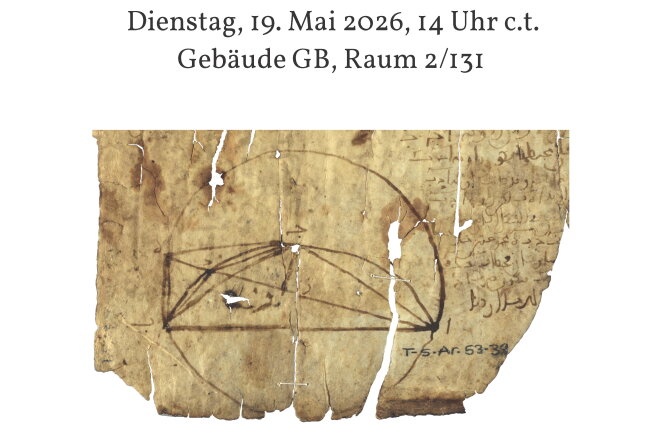
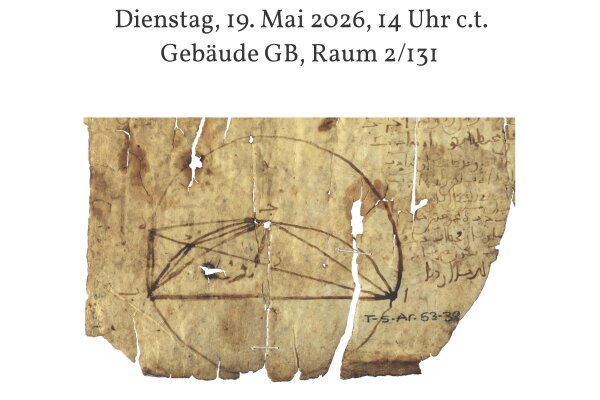
The goal of a philologist is to uncover and understand the meaning of written historical sources.The ideal object for such study is a complete text, preserved and transmitted in its entirety to reach us in the modern day. – But what do we do when we come across a text that’s incomplete? Or worse, what do we do when there’s no text at all? This lecture will discuss three fragmentary Arabic manuscripts from the Cairo Genizah to show how techniques from palaeography, codicology, interfaith studies, and material history can fit into a philologist’s toolbox.
Fragmentary Philology
What to Do When You Don’t Have Much to Do
Nick Posegay, RUB:AI, AvH Postdoctoral Fellow
19. Mai 2026 | 14 Uhr c.t. | GB 2/131 (hybrid)
Zoom Link: https://ruhr-uni-bochum.zoom-x.de/j/67396528216?pwd=bkt2T0RHbUd2bk5CSFYyemg5Qm8wQT09
The goal of a philologist is to uncover and understand the meaning of written historical sources.The ideal object for such study is a complete text, preserved and transmitted in its entirety to reach us in the modern day. – But what do we do when we come across a text that’s incomplete? Or worse, what do we do when there’s no text at all? This lecture will discuss three fragmentary Arabic manuscripts from the Cairo Genizah to show how techniques from palaeography, codicology, interfaith studies, and material history can fit into a philologist’s toolbox.
Copyright © Fakultät für Philologie 2026
Letzte Änderung: 15. Mai. 2026